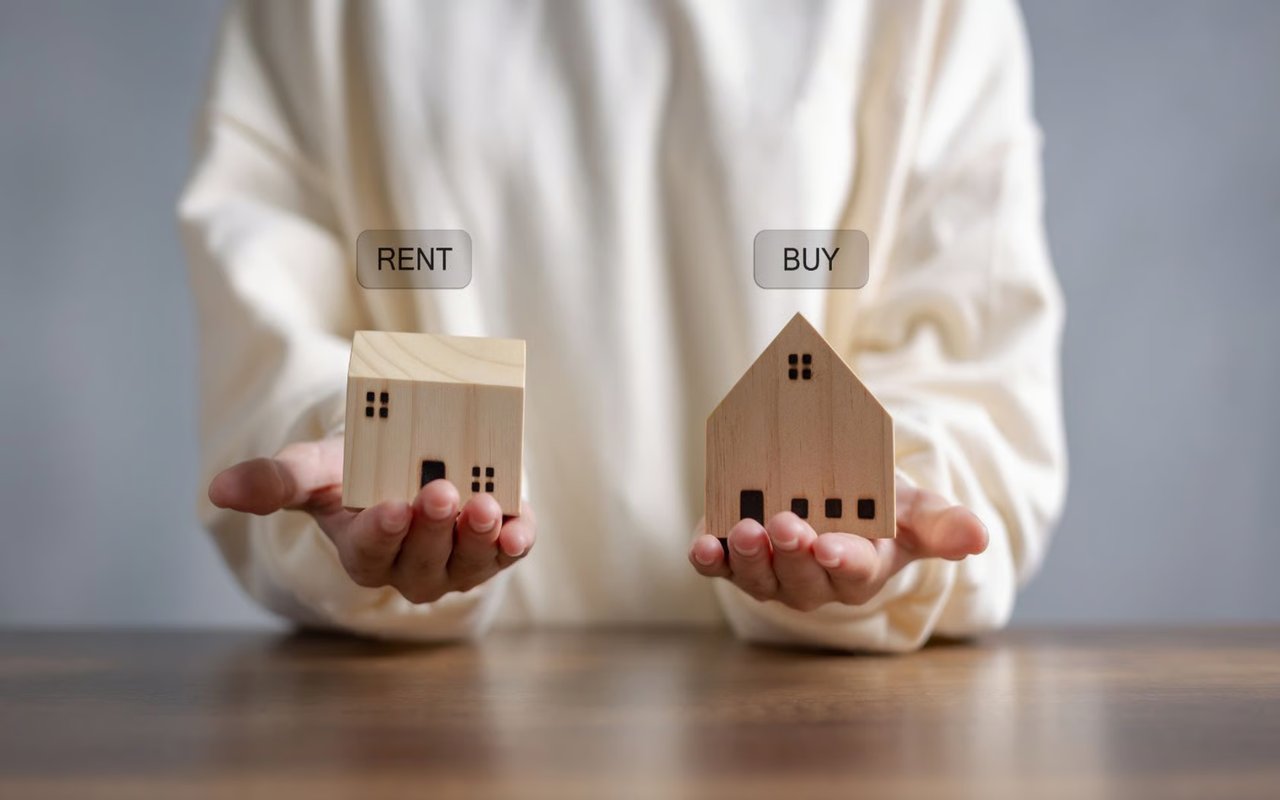
Renting vs Buying A House In 2025
Deb Wells February 18, 2025
Deb Wells February 18, 2025
The decision to buy or rent isn’t just about today’s costs—it’s about your future plans, financial stability, and lifestyle goals.
According to ATTOM’s 2025 Rental Affordability Report, in most U.S. markets, homeownership costs less of a person’s wages than renting a comparable property. But does that mean buying is always the right choice? Not necessarily.
In this guide, we’ll break down what the data says, when buying makes sense, when renting is the better option, and what you should consider before making your move.
Every year, ATTOM analyzes home prices, rental costs, and wages across hundreds of U.S. counties to determine which option—buying or renting—is more affordable. Its 2025 report found three key takeaways:
Buying a home is cheaper than renting a 3-bedroom in nearly 60% of markets. Every month, homeownership costs (mortgage, insurance, property taxes) take up a smaller percentage of income than renting a three-bedroom home.
Both renting and buying are still expensive. Whether you’re paying rent or a mortgage, housing takes up 25-60% of the average worker’s wages, meaning affordability is still a significant challenge.
Down payments are an obstacle to homeownership. While monthly costs may favor buyers, homeownership requires a sizeable upfront investment. Down payments and closing costs need to be factored into your decision.
While home prices continue to rise, ATTOM’s data shows that monthly homeownership costs are still lower than a 3-bedroom rental in nearly 60% of the country. That’s because rent prices have also increased, making it harder for renters to save.
So when should you consider buying?
Real estate is a long-term investment. If you sell too soon, you could lose money on transaction costs, even if your home’s value has increased. A five-year commitment gives you time to build equity and offset upfront costs like closing fees and moving expenses.
One of the biggest hurdles to homeownership is the down payment and other upfront costs. Buying makes more sense if you can comfortably cover a down payment, closing costs, and emergency savings without stretching your budget too thin.
Renting is like paying for a service—you get a place to live but don’t gain any ownership. When you buy a home, every mortgage payment increases your equity, which can serve as a financial asset in the future.
Buying might be the best move if you’re currently renting a one- or two-bedroom apartment but need a three-bedroom home. According to ATTOM’s report, renting a three-bedroom home eats up more of the average worker’s wages than owning a comparable house in nearly 60% of the country.
However, if you’re comfortable in a one or two-bedroom rental, renting could still be the cheaper option. Smaller rental units typically cost less than the monthly expenses of owning a house, especially when you factor in maintenance, insurance, and property taxes.
Even though homeownership may be more affordable in the long run, renting still has advantages—especially if flexibility and financial security are top priorities.
If you’re unsure about your job situation, relationship status, or long-term plans, renting allows you to move without the stress of selling a home.
Homeownership comes with unexpected expenses—repairs, maintenance, and property taxes. If you don’t have three to six months’ worth of expenses saved, renting might be better until you have a financial cushion.
Home prices are so high in some areas that buying requires a huge down payment and a large chunk of your monthly income. If mortgage payments, property taxes, and insurance would stretch your budget too thin, renting may be the safer option.
Owning a home means handling repairs and ongoing maintenance—which can add up quickly. If you prefer to call a landlord when something breaks instead of dealing with repairs yourself, renting is the hassle-free option.
The best choice depends on your financial situation, lifestyle, and long-term goals:
Buy if you want stability, are financially prepared, and plan to stay in one place.
Rent if you need flexibility, aren’t ready for homeownership costs, or live in a high-cost area.
Still unsure which option is best for you? Let’s discuss your goals and what makes the most sense for your situation! [Click here] to schedule a discovery call about your real estate goals.
Stay up to date on the latest real estate trends.
Celina Tx
Celina Tx
Local Information
Three towns, one farm road apart — and very different bets.
Celina Tx
Celina Tx
Celina Tx
Celina Tx
celina tx
We'd love to hear from you! Whether you're buying, selling, or just exploring your options, we're here to provide answers, insights, and the support you need. Contact us and start planning your next move.